New - Just Now




 Bottom Line
Kenilworth is one of those Asheville neighborhoods that can make you forget just how close you are to the center of the city.
Set among mature trees and steep, winding roads, the neighborhood has a distinctly mountain feel despite sitting just minutes from Downtown Asheville, Mission Hospital and Biltmore Village. Add in an eclectic collection of Tudor homes, Spanish-inspired architecture, Craftsman bungalows and other historic homes, and Kenilworth offers something increasingly difficult to find: a neighborhood with genuine architectural character, convenient access to the city and useful neighborhood amenities without the structure or expense of a traditional HOA community.
If you love the energy, restaurants, music and culture of Asheville but want your home to feel tucked into the mountains, Kenilworth should be on your list.
Overview of Kenilworth
Kenilworth isn't a neighborhood where every street looks the same—or where every house looks like it belongs to the same development.
That's a big part of the appeal.
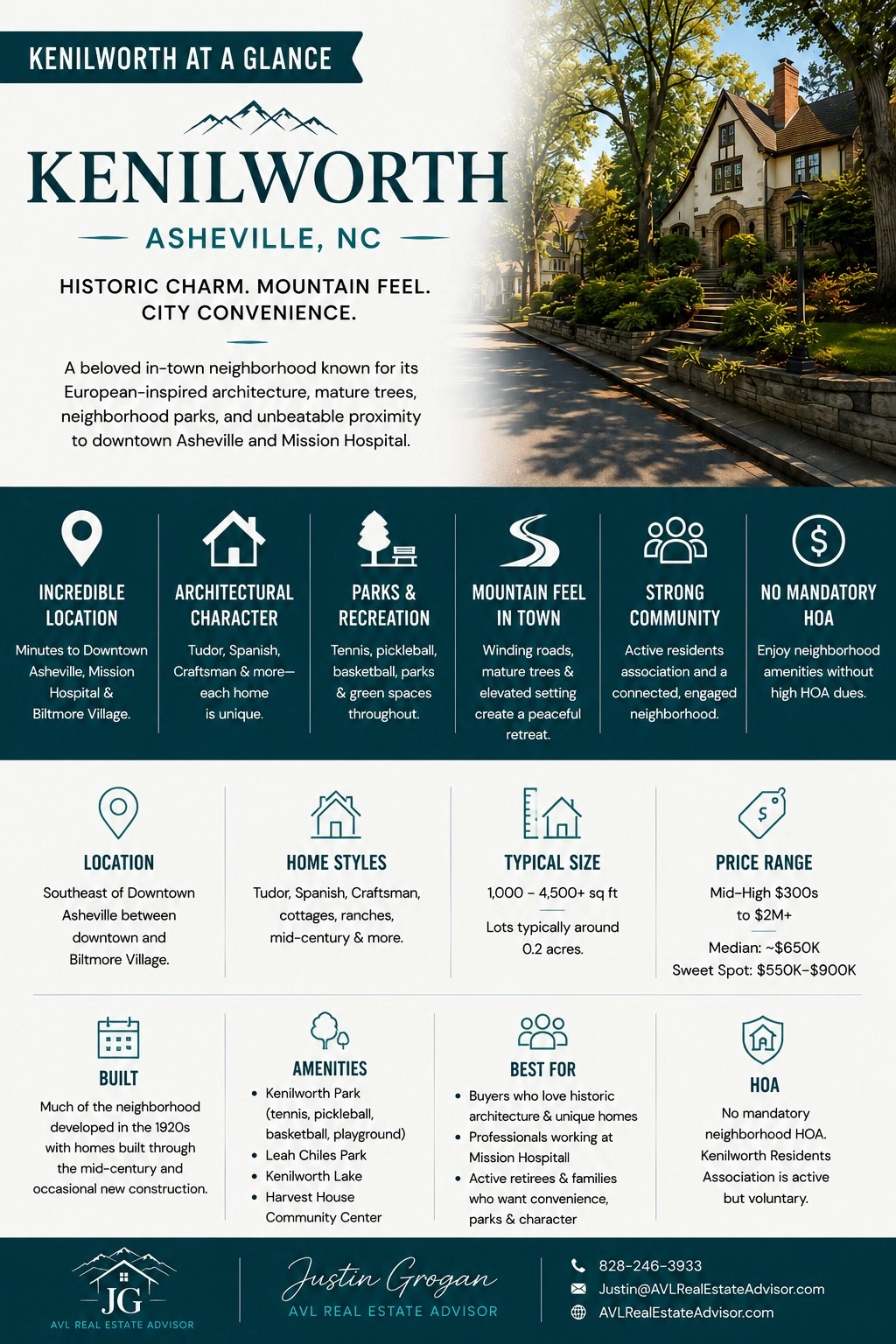
The neighborhood dates back more than a century. Kenilworth was originally developed as its own town before ultimately becoming part of Asheville in 1929, and the Kenilworth Residents Association describes it today as a community of more than 900 homes ranging from historic to eclectic.
You can see that history simply by driving through the neighborhood.
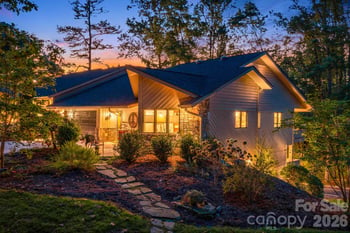
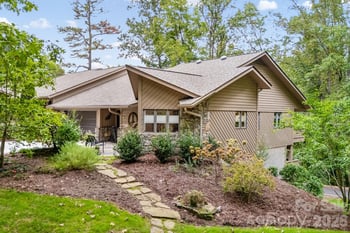
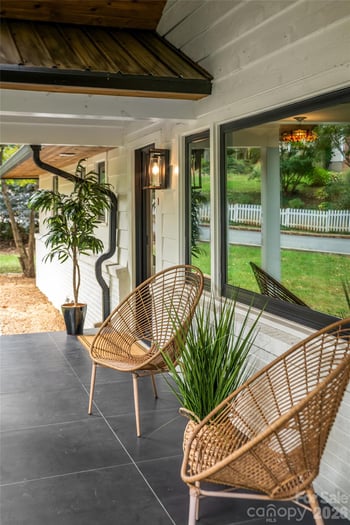
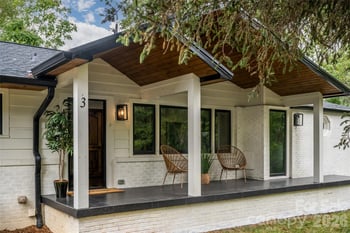
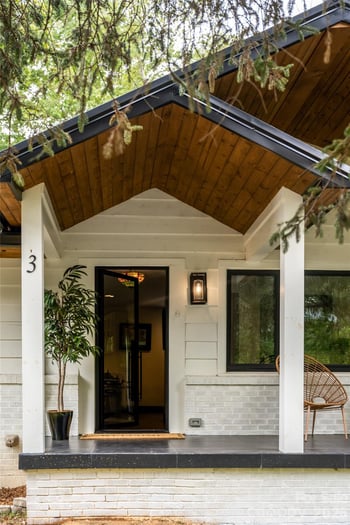
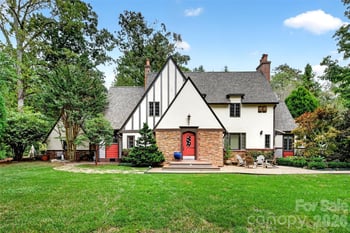
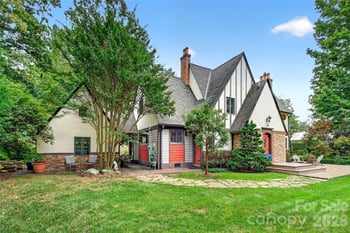
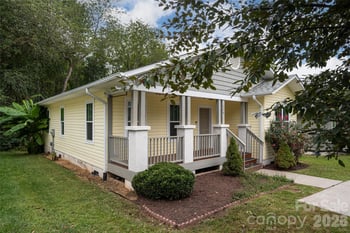
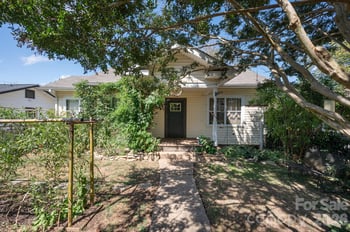
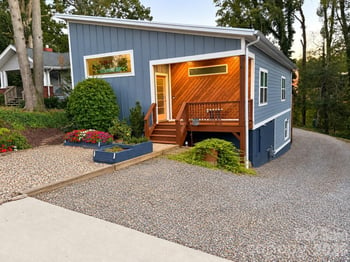
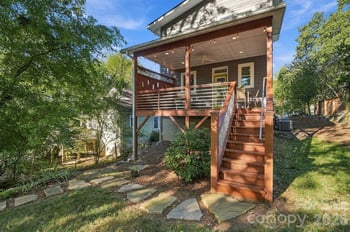
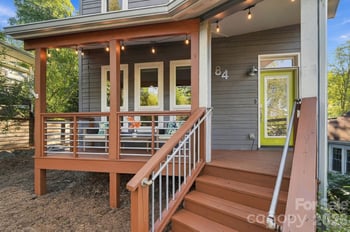
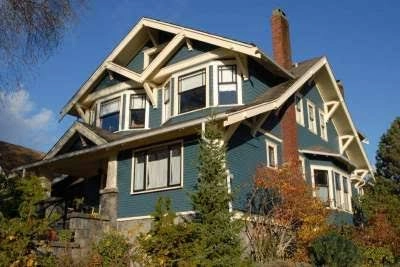
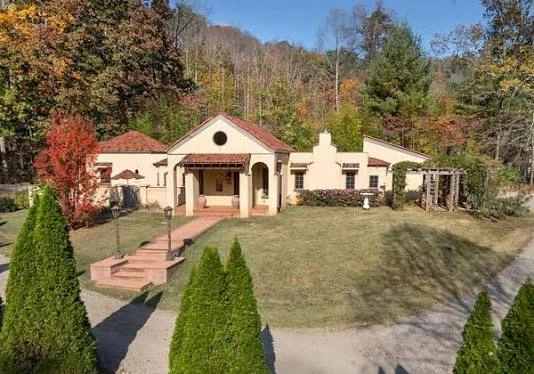
There are classic Tudors tucked beneath enormous trees, Craftsman homes with covered porches, Spanish-inspired houses that look more European than Appalachian, stone cottages, mid-century homes and a scattering of newer properties. There isn't really a single “Kenilworth house.”
That also means there is quite a bit of variation.
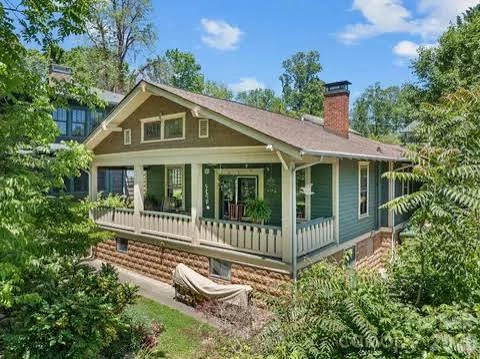
Some of these older homes have been meticulously renovated while maintaining their original character, and those homes can command a substantial premium. Others have changed very little over the decades and may need anything from cosmetic updating to considerably more attention.
But the architecture is only part of what makes Kenilworth stand out.
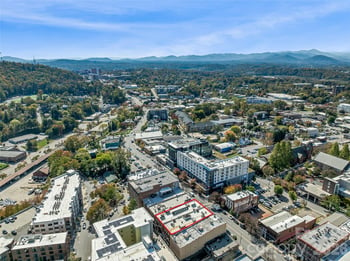
You're getting all of this in one of Asheville's most centrally located residential neighborhoods. The neighborhood sits between Downtown Asheville and Biltmore Village and the Biltmore Estate. Mission Hospital is immediately nearby, and Downtown Asheville's restaurants, galleries, breweries, music venues and shops are only minutes away.
At the same time, Kenilworth doesn't feel particularly urban once you're inside it.
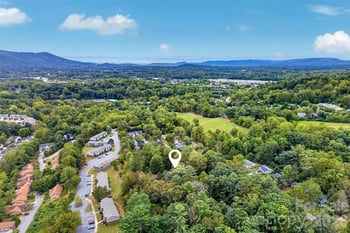
The winding roads climb and curl around wooded hillsides. Mature trees tower over many of the homes. Streets can feel surprisingly quiet and secluded considering how close you are to the center of Asheville.
That's the Kenilworth combination:
Character + convenience + a genuine mountain-neighborhood atmosphere.
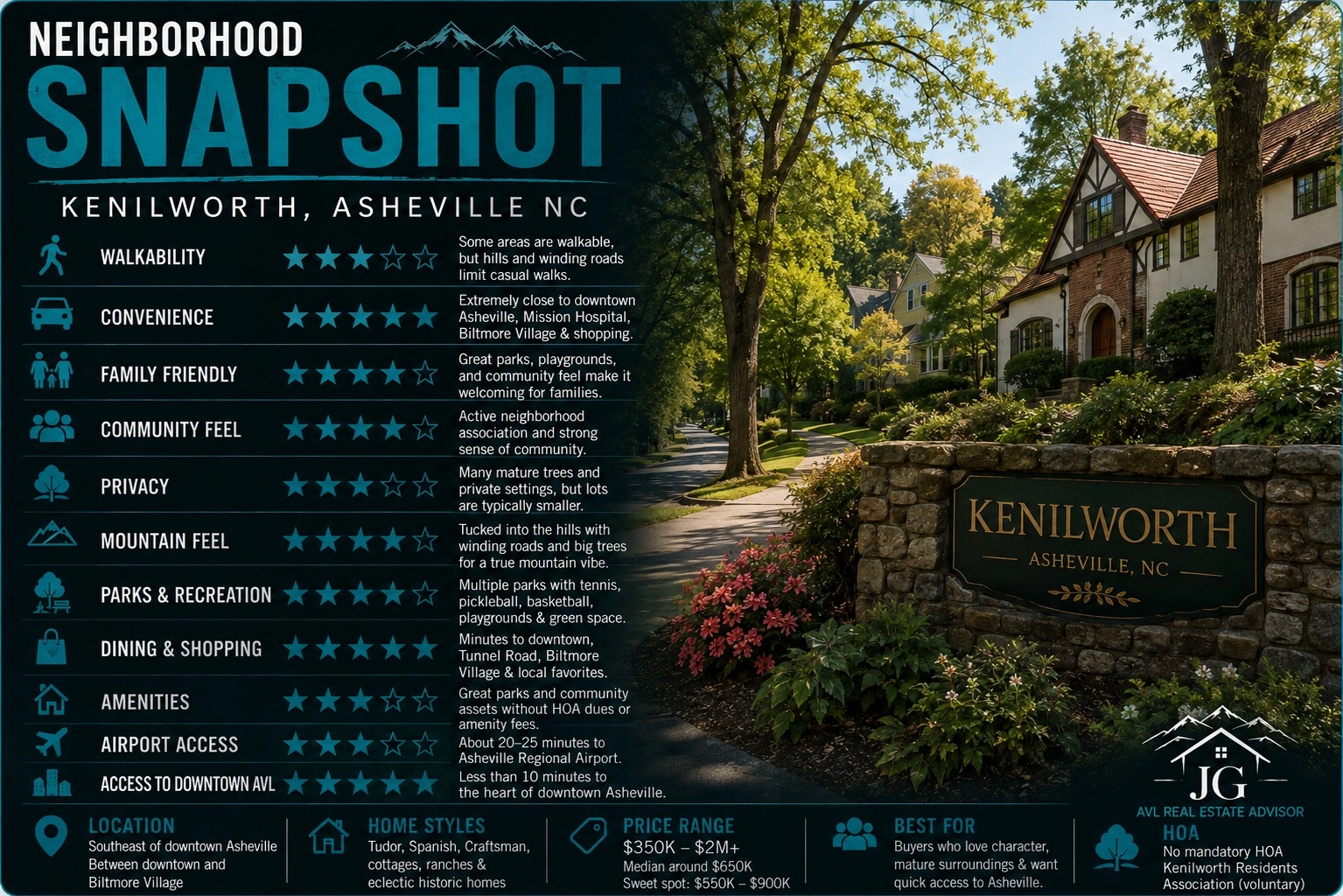
Location may be Kenilworth's greatest advantage.
Kenilworth sits immediately southeast of Downtown Asheville, positioned between downtown and the Biltmore Village/Biltmore Estate area. That places residents within easy reach of several of the places that define everyday life in Asheville.
Downtown Asheville
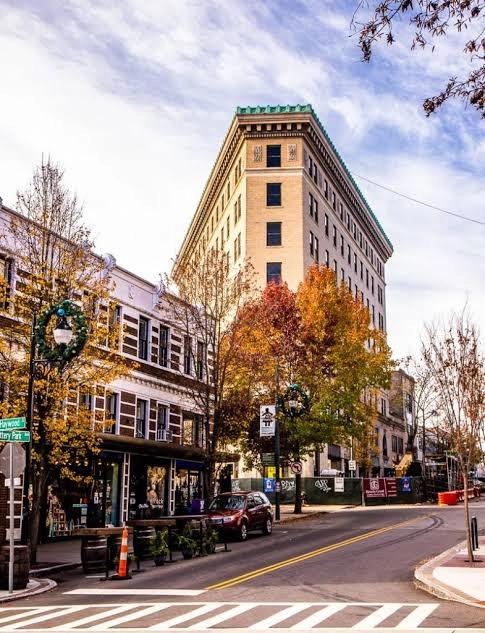 Downtown is only minutes away.
That makes Kenilworth particularly compelling for someone moving to Asheville because they love the city's restaurants, breweries, live music, art galleries and cultural scene.
There are plenty of Asheville neighborhoods where you can get beautiful mountain surroundings. There are fewer places where you can get those surroundings while remaining this close to downtown.
Mission Hospital
Kenilworth is also exceptionally convenient to Mission Hospital.
For physicians, nurses, hospital employees or anyone who simply values being close to Asheville's largest medical center, this is one of the neighborhood's biggest practical advantages.
Rather than commuting into Asheville from one of the surrounding towns or suburbs, you can live in a peaceful residential neighborhood almost next door to one of the city's largest employment and medical hubs.
Biltmore Village and the Biltmore Estate
Head the other direction and you're quickly into Biltmore Village and the entrance to the Biltmore Estate.
That gives Kenilworth a very unusual geographic position: you're essentially tucked between Downtown Asheville and one of the city's other major commercial and cultural destinations.
For relocation buyers who want to experience Asheville rather than simply live somewhere in the Asheville metro, that's a meaningful distinction.
Homes and Architecture in Kenilworth
If architecture matters to you, Kenilworth is one of Asheville's most interesting neighborhoods.
 The housing stock reflects different periods of the neighborhood's history rather than one single development era.
You'll find:
The result is an eclectic streetscape where neighboring homes can look completely different from one another.
That won't appeal to everyone.
If you love the consistency of a master-planned neighborhood, Kenilworth probably isn't the answer. But if you'd rather have a home with personality than one that follows a neighborhood design template, Kenilworth offers considerably more character.
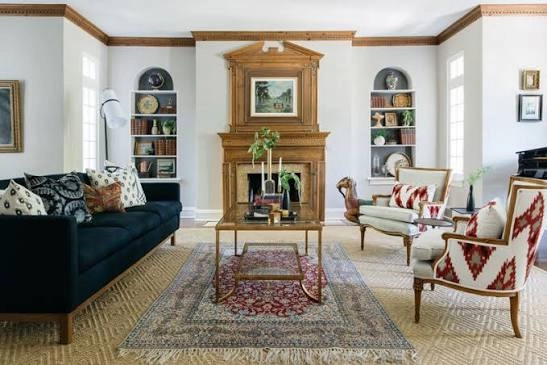
The setting reinforces that feeling.
Large established trees and mature landscaping surround many properties, while the roads wind up and down the hills rather than following a traditional suburban grid. There's very little about the neighborhood that feels newly created or manufactured.
And there's an interesting historical reason for that winding road network: when Kenilworth was being developed, founder Jake Chiles reportedly laid out streets by following the easiest routes his horse took through the hills. The unusual street pattern remains part of the neighborhood today.
It gives Kenilworth a surprisingly strong mountain atmosphere considering you're right in Asheville.
Kenilworth Asheville Home Prices
Kenilworth's architectural diversity also creates a very wide range of home values.
The median sales price is currently around $650,000, but that number doesn't tell the entire story.
At the lower end, it's possible to see older homes that need considerable updating sell in the mid-to-upper $300,000s.
On the opposite end of the spectrum, some of Kenilworth's largest, most distinctive and beautifully renovated homes can push beyond $2 million.
For most buyers, however, the heart of the Kenilworth market is roughly:
$550,000–$900,000
Within that range you'll find much of what people picture when they think about living in Kenilworth: established homes, mature trees, character architecture and convenient access to the city.
The condition of the home matters enormously here.
Two homes of similar size located relatively close to each other can have very different values depending on renovations, architectural appeal, lot characteristics and the condition of major systems.
This isn't a neighborhood where I would look only at square footage and price per square foot.
The individual property matters.
Parks and Amenities in Kenilworth
One of my favorite things about Kenilworth is that you get genuine neighborhood amenities without living in a traditional amenity community.
There's no gated entrance, large clubhouse or resort-style neighborhood pool. And there isn't a mandatory neighborhood HOA collecting significant annual dues.
Instead, the amenities are integrated into the neighborhood itself.
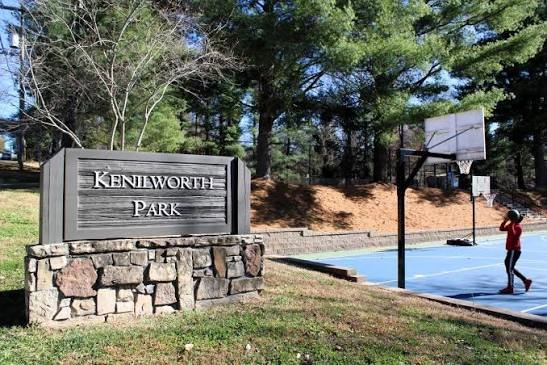 Kenilworth Park includes tennis, pickleball, basketball, and a playground
There are also several smaller neighborhood parks and green spaces scattered throughout Kenilworth. The City of Asheville has highlighted a collection of parks within the community rather than a single centralized recreational facility.
That distinction matters.
A lot of buyers want parks, recreation and a sense of neighborhood community but don't necessarily want to buy into a master-planned development with substantial HOA dues.
Kenilworth offers another option.
And there is a genuine community infrastructure here. The Kenilworth Residents Association focuses on neighborhood connections, preservation and local initiatives, but it operates as a residents association rather than the type of mandatory HOA you might encounter in newer developments.
For an established city neighborhood, that's a pretty appealing combination.
What Is It Like to Live in Kenilworth?
Kenilworth feels less uniform and more eclectic than many of the Asheville neighborhoods I've covered.
That's true of the houses, but it's also true of the neighborhood itself.
You might turn down one street and find stately historic homes surrounded by enormous trees. Another road might have smaller cottages and ranch houses. Then the street curves uphill and suddenly you're in a setting that feels far more mountainous than you would expect this close to downtown.
That unpredictability gives Kenilworth personality.
 It also has more energy around it than a community farther outside Asheville.
You're not retreating 20 or 30 minutes from town every evening. Downtown is right there. Restaurants are right there. Mission Hospital is right there. Biltmore Village is right there.
So you can spend the evening downtown and be back home in your quiet, wooded neighborhood within minutes.
For the right buyer, that's the sweet spot:
the energy of the city without having to live in the middle of it.
Who Is Kenilworth Best For?
I think Kenilworth works especially well for buyers who value character over uniformity.
If your idea of the perfect Asheville home includes an older Tudor, a Craftsman bungalow, a Spanish-inspired home or a unique stone cottage rather than newer construction, this neighborhood deserves a serious look.
It's also particularly compelling for buyers who want to participate in Asheville.
Maybe you're moving here because you love the food scene. Maybe it's live music. Maybe you spend weekends walking downtown, visiting galleries or going to breweries. Maybe being close to Mission Hospital is important.
Kenilworth allows you to remain extremely connected to those things while still coming home to mature trees, winding mountain roads and a quieter residential setting.
There aren't many Asheville neighborhoods that combine those qualities quite this well.
What Buyers Love About Kenilworth
1. The Location
You're minutes from Downtown Asheville, Mission Hospital and Biltmore Village.
It's difficult to find a residential mountain setting with better access to the center of Asheville.
2. Architectural Character
Tudors, Craftsman homes, Spanish influences, stone cottages and other older homes give Kenilworth a personality that newer developments simply can't recreate.
3. Mature Trees and Landscaping
This is an established neighborhood, and it looks like one.
Large trees, mature landscaping and wooded hillsides help Kenilworth feel much more removed from the city than it actually is.
4. Parks and Recreation
Tennis, pickleball, basketball, playgrounds and multiple green spaces give residents neighborhood recreation without requiring a traditional HOA amenity package.
5. Proximity to Mission Hospital
For anyone working at Mission—or simply prioritizing medical access—Kenilworth's location is difficult to beat.
Things to Consider Before Buying in Kenilworth
Kenilworth has plenty going for it, but there are several tradeoffs buyers need to understand.
Older Homes Require More Due Diligence
The architectural character that makes Kenilworth appealing comes with a tradeoff: many of these homes are old.
Some have been comprehensively renovated. Others may simply look updated.
Those aren't necessarily the same thing.
When buying an older Kenilworth home, I'd want to pay close attention to major systems and structural components including:
A beautiful renovated kitchen doesn't tell you what is happening underneath the house.
That's not a reason to avoid older homes. It's simply a reason to investigate them carefully.
Walkability Is Complicated
Kenilworth is close to almost everything, but I wouldn't describe every part of it as traditionally walkable.
The steep hills and winding roads can make a casual evening stroll or long dog walk less comfortable than it would be in somewhere flatter like Montford or Biltmore Park.
If walkability is important to you, evaluate the exact street rather than assuming the entire neighborhood functions the same way.
Lots Tend to Be Modest
Many homes sit on roughly 0.2-acre lots.
That's enough for a yard and some separation from neighbors, but buyers looking for an acre of land, significant privacy or a deeply secluded mountain property probably won't find what they're looking for here.
Kenilworth gives you a mountain neighborhood feeling.
It generally doesn't give you a large mountain estate.
The Neighborhood Isn't Uniform
The variance is part of Kenilworth's charm—but it's still variance.
Home condition, architecture, views, road characteristics and overall streetscape can change from block to block.
I highly recommend driving through different portions of the neighborhood before deciding whether Kenilworth is right for you.
Kenilworth vs. Other Asheville Neighborhoods
If you like Kenilworth, there are three other Asheville neighborhoods I'd probably encourage you to explore.
Montford
Consider Montford if: you love classic architecture and want excellent access to downtown but prefer a flatter, more traditionally walkable neighborhood.
Montford arguably competes most directly with Kenilworth on historic architectural character.
The difference is the setting.
Montford feels much more like an established historic city neighborhood. Kenilworth's steep, winding streets and wooded hills give it considerably more of a mountain atmosphere.
Kenilworth: more mountain feel
Montford: better traditional walkability
Haw Creek
Consider Haw Creek if: you like the feeling of being tucked into a wooded hillside but don't care as much about historic architecture.
Haw Creek offers a similarly interesting combination of convenience and mountain surroundings. It's slightly farther from downtown and doesn't have nearly the same concentration of character homes.
But buyers who care more about the wooded setting than the architecture may prefer it.
Kenilworth: stronger architecture + more central
Haw Creek: similar tucked-away feel with a broader suburban mix
Grove Park
This is probably the most interesting comparison.
Grove Park has many of the same qualities that make Kenilworth special: mature landscaping, historic homes, interesting architecture, hills and excellent access to the city.
It also tends to offer greater view potential.
The catch?
Price.
The median home price around Grove Park is closer to $1.1 million, compared with roughly $650,000 in Kenilworth.
For buyers who love the Grove Park aesthetic and location but don't necessarily want a seven-figure budget, Kenilworth may be one of the most compelling alternatives in Asheville.
My Take as a Local Asheville Realtor
Kenilworth occupies a really interesting place in the Asheville market.
There are neighborhoods closer to downtown.
There are neighborhoods with bigger lots.
There are neighborhoods that are more walkable.
And there are certainly communities with more elaborate amenities.
But there aren't many neighborhoods that combine classic architecture, immediate access to the city and a legitimate tucked-away mountain atmosphere quite like Kenilworth.
Grove Park is probably the closest comparison, but you're generally stepping into a considerably higher price bracket there.
That's why I think Kenilworth makes sense for a surprisingly broad range of buyers.
The parks, tennis and pickleball create recreational options within the neighborhood. Downtown provides the restaurants, art, music and culture. Mission Hospital is almost next door. And when you get home, mature trees and winding mountain roads make the neighborhood feel much farther removed from Asheville than it actually is.
My biggest advice here is to evaluate the individual home carefully.
Older homes are part of the appeal, but age can also hide expensive issues.
Even when a home has undergone beautiful cosmetic renovations, I want my buyers paying close attention to foundations, crawl spaces, grading, drainage, plumbing, electrical systems and other big-ticket components.
Buy the character.
Just make sure you understand what comes with it.
Frequently Asked Questions About Kenilworth Asheville NC
Is Kenilworth a good neighborhood in Asheville NC?
Kenilworth is popular with buyers who want a combination of historic architecture, mature trees, neighborhood parks and close proximity to Downtown Asheville. Its biggest strengths are location and character. Buyers should be comfortable with older homes, hilly roads and relatively modest lot sizes.
Where is Kenilworth in Asheville?
Kenilworth is located southeast of Downtown Asheville between downtown and the Biltmore Village/Biltmore Estate area. It is also immediately convenient to Mission Hospital. The neighborhood's central location is one of its biggest advantages.
How far is Kenilworth from Downtown Asheville?
Kenilworth is immediately adjacent to central Asheville, and most parts of the neighborhood are only a short drive from downtown. Exact travel time depends on your location within the neighborhood and traffic.
Is Kenilworth Asheville walkable?
Kenilworth is very close to downtown and other Asheville destinations, but walkability varies substantially by street.
Steep hills, winding roads and inconsistent pedestrian conditions mean that it doesn't offer the same type of easy neighborhood walking you'll find in flatter parts of Asheville. If walkability is a priority, evaluate the specific property rather than relying on the neighborhood's proximity to downtown.
Does Kenilworth Asheville have an HOA?
Kenilworth does not operate like a traditional master-planned neighborhood with a mandatory HOA and extensive private amenities.
The neighborhood does have an active Kenilworth Residents Association focused on community connections and neighborhood initiatives.
What types of homes are in Kenilworth Asheville?
Kenilworth has unusually diverse architecture.
Buyers can find Tudor homes, Craftsman bungalows, Spanish-inspired architecture, stone cottages, ranch homes, mid-century properties and other eclectic styles. Much of the neighborhood's appeal comes from the fact that the homes don't all look alike.
How much do homes cost in Kenilworth Asheville?
The median price is around $650,000, although Kenilworth has a very wide price range.
Homes requiring substantial updating can occasionally sell in the mid-to-upper $300,000s, while exceptional properties can exceed $2 million.
For many buyers, roughly $550,000 to $900,000 represents the core of the neighborhood's market.
Is Kenilworth close to Mission Hospital?
Yes. Proximity to Mission Hospital is one of Kenilworth's major location advantages, making the neighborhood particularly convenient for people who work at or regularly need access to the hospital.
Is Kenilworth close to the Biltmore Estate?
Yes. Kenilworth sits between Downtown Asheville and the Biltmore Village/Biltmore Estate area, giving residents easy access to both.
Are there parks in Kenilworth Asheville?
Yes.
Kenilworth has multiple neighborhood parks and green spaces. Kenilworth Park includes tennis, pickleball, basketball and a playground.
This is one of Kenilworth's underrated advantages because residents get useful neighborhood recreation without living in a traditional HOA-driven amenity community.
Is Kenilworth Asheville good for retirees?
Kenilworth can be a strong option for active retirees who prioritize proximity to downtown, medical care, parks, restaurants and cultural amenities.
However, the hills and winding roads may be a drawback for someone specifically looking for a flat, highly walkable neighborhood.
What neighborhoods are similar to Kenilworth Asheville?
The closest comparisons are generally Grove Park, Montford and Haw Creek.
Montford offers historic architecture and excellent downtown access with a flatter setting. Haw Creek provides a similar wooded mountain atmosphere but less architectural character. Grove Park combines historic homes, hills and city access but generally carries a considerably higher price point.
Final Thoughts: Is Kenilworth Right for You?
Kenilworth isn't trying to be polished.
That's exactly why many buyers love it.
The roads twist through the hills. The homes don't match. Giant trees shade properties that have been there for generations. A renovated Tudor might sit around the corner from a Craftsman bungalow, which might be a few houses away from something completely different.
And somehow all of that exists only minutes from the middle of Asheville.
If you're looking for new construction, large lots, perfectly flat sidewalks or a resort-style amenity package, there are better neighborhoods to explore.
But if your priorities are architectural character, mature mountain surroundings and incredible access to Asheville, Kenilworth deserves a spot near the top of your list.
If you're considering a move to Asheville and you're trying to figure out which neighborhood actually fits the lifestyle you want, that's where I can help.
I work with buyers relocating to Western North Carolina and help them compare Asheville neighborhoods based on much more than the house itself.